TL;DRMost "travel clothes" sold at outdoor retailers are overpriced versions of normal clothes that scream tourist in any city. Wear what locals wear; pack what you'd wear at home with minor tweaks for climate.
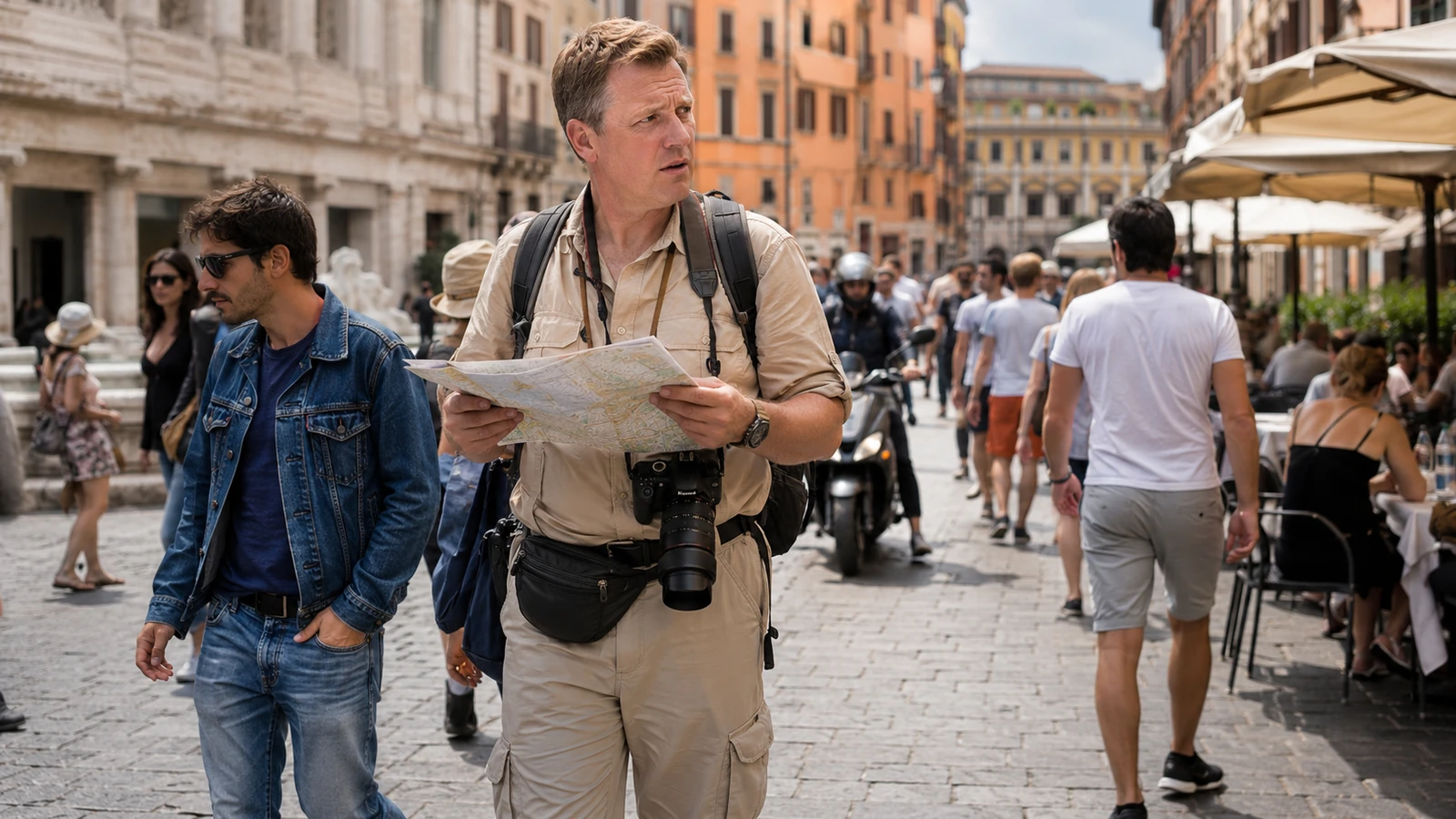
Walk into any REI or Magellan's and you'll find an entire wall of clothes designed to do everything: pants that unzip into shorts, shirts with hidden passport pockets, vests with 27 zippers. Most of them cost 2–3× equivalent regular clothing, look like a uniform from a TLC reality show, and mark you as a target the moment you leave the hotel.
The honest truth: locals in almost every world city dress more like you do at home than like the catalog model. Pack your normal wardrobe with a few practical tweaks and you'll look better, blend in, and spend less.
What's actually worth keeping from the travel-clothes aisle
A small handful of items earn their price:
- Merino wool t-shirts or base layers · Icebreaker, Smartwool, or Unbound Merino. Resist odor for 3–5 wears, dry overnight, regulate temperature. Around $60–$90 per shirt. Worth it.
- A packable rain shell · Patagonia Houdini, Arc'teryx Squamish, or any 4–6 oz waterproof jacket that crumples into a fist-sized pouch. Worth it.
- Quick-dry travel underwear · ExOfficio, Saxx, or Uniqlo Airism. Sink-washable, dry by morning. Worth it.
- One pair of versatile shoes, sneakers that don't look like running shoes (Allbirds, Cariuma, Veja). Walkable for a 10-mile day, presentable for a nicer dinner. Worth it.
What to skip
Most of the rest:
- Convertible zip-off pants, they look terrible, they don't fit well as either pants or shorts, and they're an instant tell. Bring real pants and real shorts.
- Safari vests with hidden pockets, pickpockets read them as advertising and tailor their approach. A normal jacket with normal pockets and basic awareness works better.
- "Travel" shirts with 14 pockets, you don't need them. Your phone has the map, your card has the money.
- Money belts worn under clothes, these were a 1990s solution to a problem that today's contactless cards and split-bag strategy solves better. They're sweaty, accessing them looks suspicious, and the bulge ironically advertises that you have things worth hiding.
What locals actually wear
Smart dressing for travel is the same as smart dressing at home: dark colors hide stains, neutrals match everything, and structured pieces (button-down, decent shoes) earn respect at upscale restaurants. Add one accent piece (scarf, hat) that you can swap to refresh outfits in photos.
For warmer climates, look at what people in the destination wear before you pack. Bangkok is a t-shirt city. Rome is a button-down city. Tokyo is closer to monochrome. Paris is everyday-elegant. A 30-second scroll through the destination's tag on Instagram tells you more than any guidebook.
Bottom line
Travel clothes solve a problem most travelers don't have, extreme expedition conditions. For ordinary city, beach, and casual hike travel, your normal clothes plus a merino base layer and packable shell does everything the special wardrobe does, costs less, looks better, and helps you stop standing out in every photo.