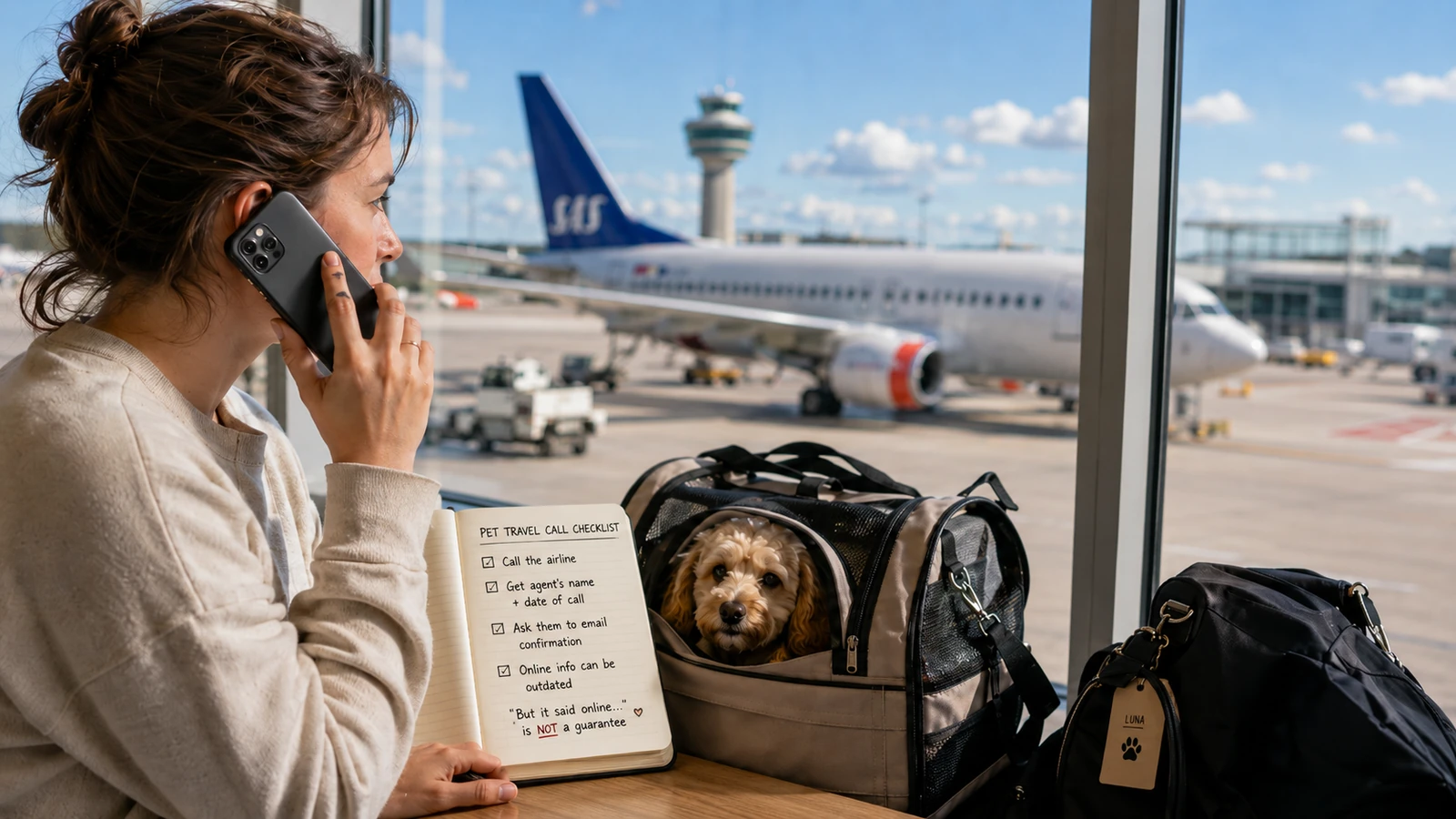
TL;DRAirline pet policies are notoriously inconsistent between published rules and gate-level enforcement. Call the airline directly within 72 hours of your flight to verify breed restrictions, carrier dimensions, and pet count, the website often lags behind operational reality.
Pet travel is the area where airline policy and airline practice diverge the most. The website may list one carrier dimension; the gate agent measures with a different ruler. The breed may be "accepted" online but turned away at check-in because the temperature at the destination is forecast above the airline's heat embargo cutoff. The "two pets per cabin" rule turns out to be "five total per cabin including ones already booked on this flight."
The published rules are a starting point. The phone call confirms what actually applies to your flight.
What to verify on the call
- Pet count for your specific flight. Most airlines cap the number of in-cabin pets per aircraft. If the cap is already met, you'll be turned away even with a ticketed reservation. Confirm your pet is the booked one.
- Carrier dimensions. Bring out a ruler and measure your soft-sided carrier flat, compressed (which is how it'll fit under the seat). Compare to the published limits. Confirm with the agent.
- Breed restrictions. Brachycephalic ("snub-nosed") breeds, bulldogs, pugs, Persian cats, etc., are banned outright on many airlines and seasonally banned on others due to respiratory risk in cargo holds.
- Temperature embargoes. Cargo pet travel is restricted when ground temperatures at origin, transit, or destination exceed 85°F or fall below 45°F at the time of the flight. Confirm the current forecast and the airline's cutoff.
- Health certificate requirements. Most US airlines require a USDA-accredited vet's health certificate issued within 10 days of travel. International destinations may require certificates issued within 7 days plus rabies titer documentation.
- Pet fee at this airline, this route. Usually $95–200 each way for cabin pets.
International travel adds layers
For international pet travel, the verification process is a multi-month project, not a phone call:
- Microchip (ISO 11784/11785 compatible) before rabies vaccination
- Rabies vaccination at least 21 days but typically not more than 12 months before travel
- USDA-accredited vet exam and APHIS-endorsed health certificate within 7–10 days of travel
- Destination country's specific requirements (some require titer tests with months-long waiting periods)
- Some countries (UK, Australia, Hawaii) have mandatory quarantine for non-EU-pet-passport pets, sometimes weeks long
Start the international pet process at least 6 months before travel. The CDC's pet import page and the USDA APHIS Pet Travel site list destination-specific rules.
Day-of-travel habits
- Arrive 30 minutes earlier than usual. Pet check-in is a separate process.
- Tire your pet out with a long walk or play session before leaving for the airport.
- Skip food in the 4–6 hours before flight; small amount of water OK.
- Don't sedate pets without explicit vet guidance, sedation in cargo holds is a known cause of in-flight deaths because pets can't reposition themselves.
- Attach a label to the carrier with your name, destination address, phone number, pet name, and vet phone number.
Bottom line
Pet travel rules look simple on the website and bite hard at the gate. A 15-minute phone call within 72 hours of your flight, plus a months-ahead start on international paperwork, is the difference between a normal travel day and an emergency rebook. Don't trust the booking confirmation; verify everything you can with a human voice on the phone.