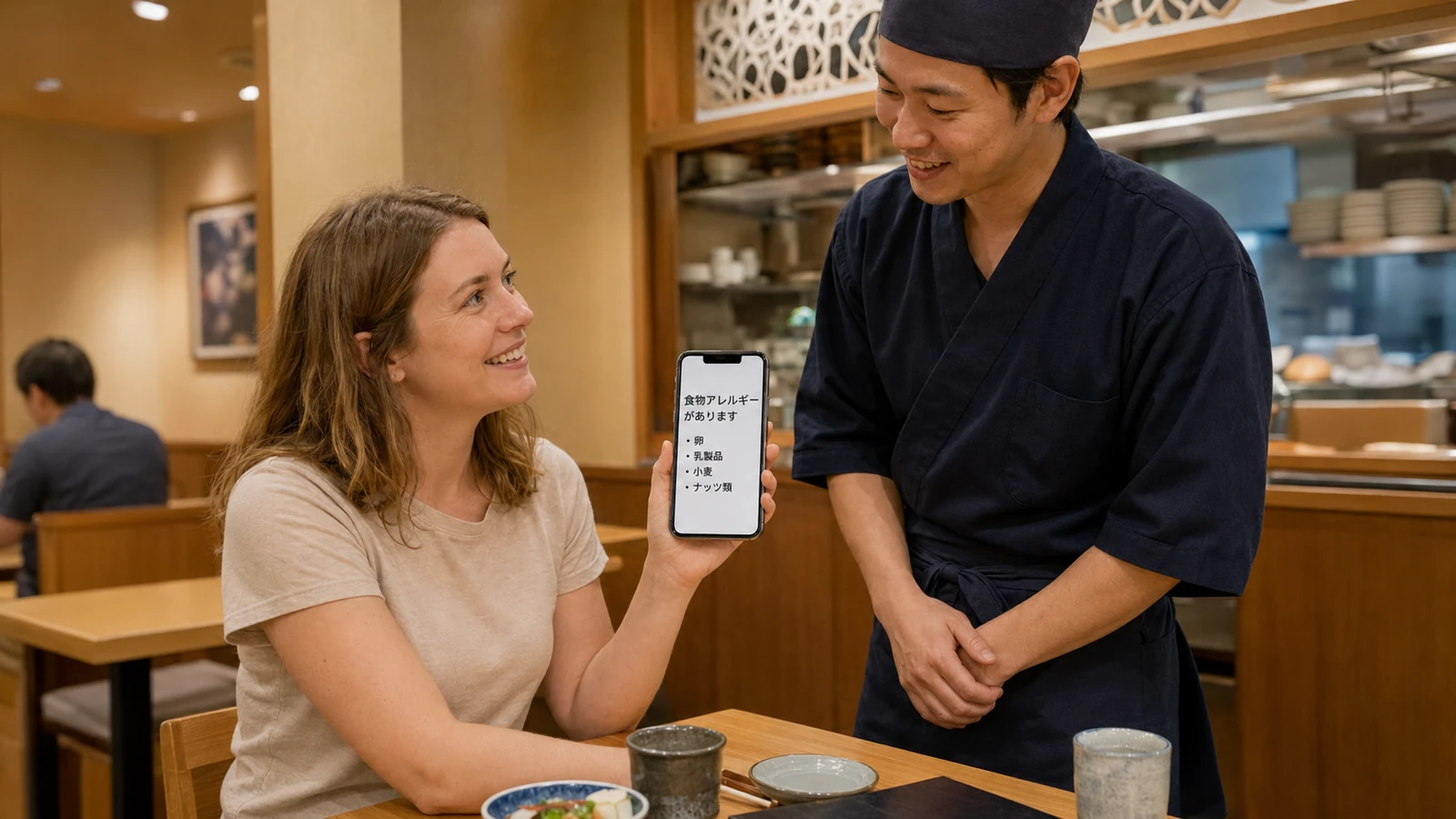
TL;DRIf you have a food allergy, print a card in the local language listing exactly what you can't eat, and the hospital-grade clarity to back it up. Restaurants can read it, kitchens can read it, and it works even when staff don't speak yours.
Food allergies that are mildly inconvenient at home become genuinely dangerous abroad. The waiter doesn't speak English. The menu describes the dish without listing ingredients. The chef substituted peanut oil for the original recipe's sesame because that's what was on hand this week. The path from "I'd like the noodle dish" to "anaphylactic shock in a hotel bathroom" is shorter than most travelers realize.
An allergy card (properly written, properly carried) closes most of that distance.
What goes on the card
- The allergen itself, in the destination language. Not the English word in quotes, the actual translated term used in that country's food labeling.
- The severity: "severe, may cause anaphylaxis" or "mild, causes discomfort", restaurants treat these differently and need to know which.
- Cross-contamination flag: "I cannot eat food cooked in the same pan / fryer / cutting board as
." This is the most commonly missed detail. - Common hidden sources: e.g. for peanuts in East Asian cuisines, mention peanut oil specifically. For seafood, mention fish sauce. For dairy, mention ghee/butter cooking surfaces.
- What you CAN eat, a brief positive list helps the restaurant find something rather than just refusing service.
- Emergency contact line in case of a reaction: "If I am having difficulty breathing, please call
."
Where to get the translation right
Don't just paste English into Google Translate. The risks of slightly-wrong translations in food contexts are non-trivial. Three reliable sources:
- SelectWisely.com, sells professionally translated allergy cards in 50+ languages for $9. Worth it for severe allergies.
- The destination country's food allergy association · UK has Anaphylaxis Campaign; Japan has anaphylaxis network; many countries have similar non-profits with downloadable templates.
- A native speaker, if you have a friend or colleague who speaks the destination language, ask them to translate and verify. The verify step is what catches the missed nuances.
How to use it
- Hand the card directly to the waiter before ordering, not as you're handing back the menu.
- Ask them to take the card to the kitchen for confirmation. If they don't, that's a red flag, pick a different restaurant.
- When the food arrives, ask once more verbally for confirmation. Yes, you'll feel pushy. Pushy is correct here.
- Carry at least three copies, one in your wallet, one in your bag, one in your phone case. Photograph it for backup.
Bottom line
An allergy card is the difference between "I hope the kitchen understands" and "I know the kitchen understands." It costs a few dollars or a few minutes to prepare and turns a potentially trip-ending medical emergency into a normal meal. For severe allergies it's not optional.