TL;DRSetting your watch and phone to destination time the moment you board, then eating, sleeping, and behaving on that schedule for the rest of the flight, significantly reduces jet lag on arrival.
Jet lag isn't really about lost sleep, it's about your circadian rhythm being out of sync with the local light/dark cycle and meal cues. Your body's master clock takes about one day per time zone to fully reset on its own, which is why a five-time-zone trip leaves you ragged for five days if you don't actively help it adjust.
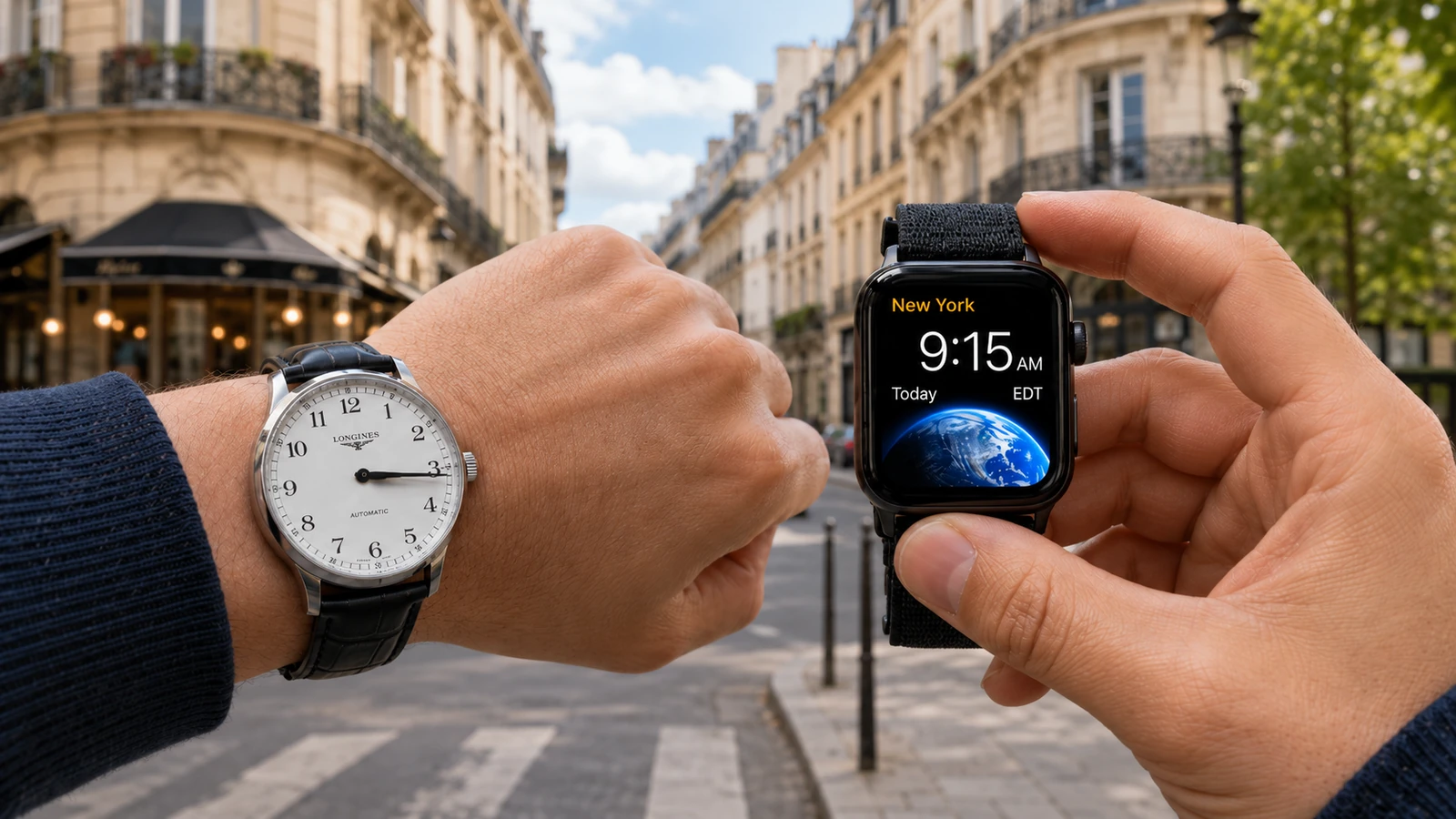
The single most evidence-supported trick: switch to destination time mentally before you land. The moment you board the outbound flight, change your watch and phone to the new time zone and start behaving on that schedule, eating when locals would be eating, sleeping when locals would be sleeping, ignoring meal service that doesn't match.
Why it works
Circadian science consolidated over the past decade points to three "zeitgebers" (German for "time givers") that pull your internal clock around:
- Light exposure (the strongest)
- Meal timing
- Activity / sleep timing
Resetting your watch alone doesn't move your clock, but the behaviors it enables, declining the dinner service if it's now 2 AM at your destination, sleeping in the cabin when it's destination-night, staying awake when it's destination-day, start moving your clock forward (or back) hours before you land. By the time you walk out of arrivals, you've already gained a partial reset.
The practical playbook
- Before the flight: shift your sleep schedule by 30–60 minutes per night for 2–3 nights toward the destination. East-bound (jet lag is usually worse) = sleep earlier; west-bound = stay up later.
- The moment you board: reset all your clocks to destination time. Look at what time it is locally. Decide: am I going to sleep now, or stay up?
- Sleep when locals would: if it's 11 PM at destination when you board, sleep. Use an eye mask, earplugs, neck pillow. Decline meal service. Set an alarm if needed.
- Eat on destination time: ignore airline meal service and bring your own snacks for the destination's mealtimes. Have a light meal at "destination dinner time" even if that's 3 AM cabin time.
- Hydrate: dry cabin air dehydrates you, and dehydration amplifies jet-lag symptoms. Water before alcohol, every time.
- Skip the booze: alcohol disrupts the REM sleep that's already short on planes.
- On arrival, chase the light: if you land in daylight, get sunlight on your face for 15+ minutes within an hour of arrival. If you land at night, dim screens and prep for sleep.
Common pitfalls
Don't nap on arrival. The temptation is enormous (you're exhausted, the bed is right there) but a long nap after landing typically wrecks your night and extends jet lag by another day. If you must, set a 25-minute alarm and stick to it.
Bottom line
Jet lag isn't unavoidable, it's just usually mishandled. The watch-reset is mental anchoring for the harder behavioral work, declining the flight dinner that doesn't fit your destination's schedule, sleeping when the cabin lights are on, chasing morning sun on arrival. Get those right and you'll spend day one of the trip exploring, not sleepwalking.