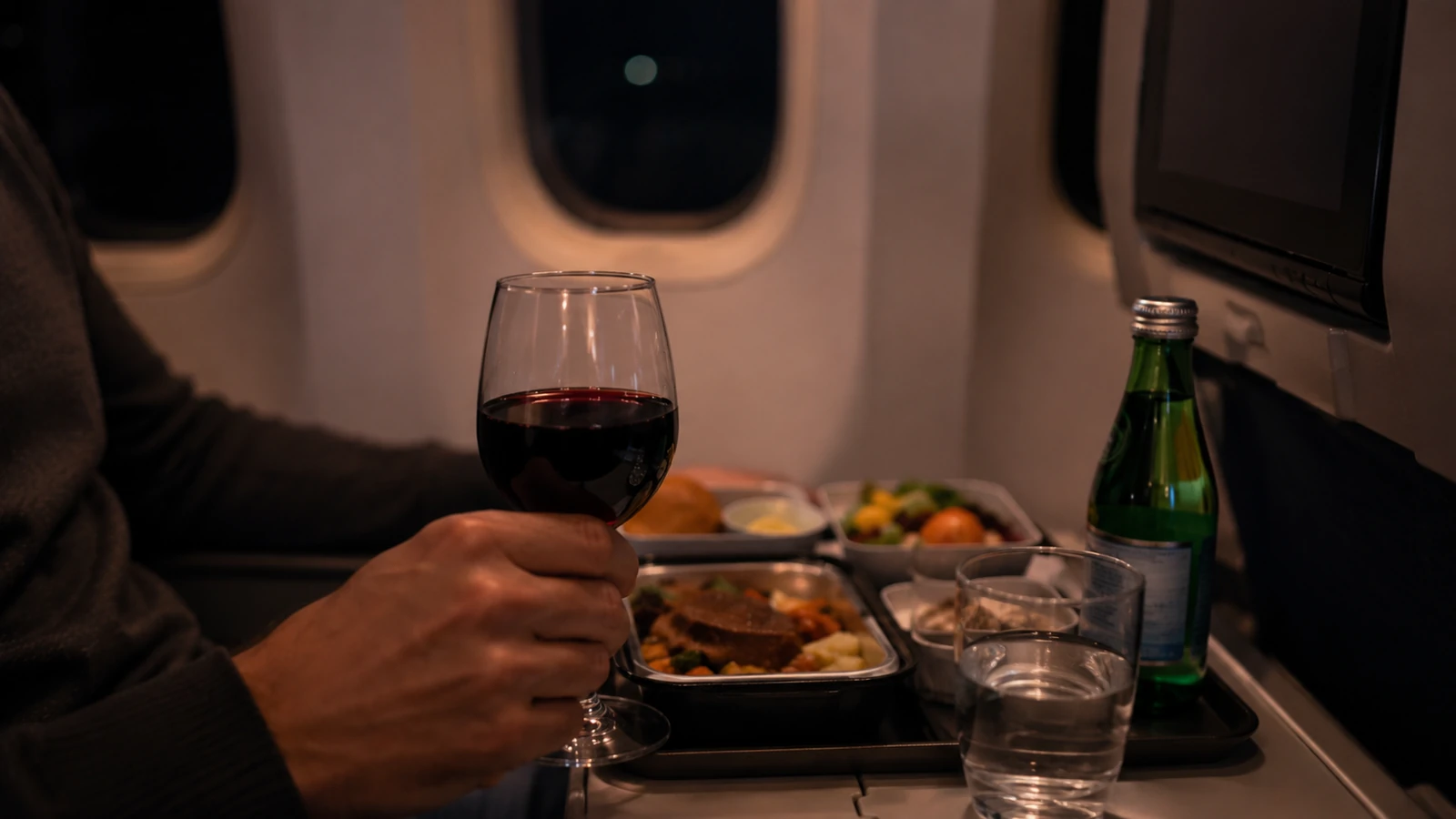
TL;DRCabin alcohol hits harder due to lower air pressure, dehydrates you faster, and wrecks the limited REM sleep you can get on a plane. On overnight long-haul flights, the free wine is the single biggest amplifier of jet lag.
Long-haul cabins are pressurized to roughly 6,000–8,000 feet of elevation, high enough that resting blood-oxygen saturation drops 3–4 percentage points. Add the famously dry cabin humidity (typically 10–20%, compared to 30–60% indoors at sea level) and your body is already operating at a deficit. Layer alcohol on top and you compound dehydration, vasodilation, and impaired oxygen delivery in conditions that already reduce all three.
The result is the experience every long-haul flyer knows: arrival headache, dry mouth, brain fog. Some of that is unavoidable. Most of it is alcohol-mediated and entirely preventable.
What the research actually shows
A landmark 2024 study in Thorax simulated cabin conditions and measured what happened when participants drank 2–4 small drinks before sleeping. Their blood-oxygen saturation dropped to 85%, the level at which a hospital would normally administer supplemental oxygen, and they spent significantly less time in restorative REM sleep. The control group (cabin pressure, no alcohol) showed only mild effects. The combination compounded.
What that means in plain English: the wine isn't just keeping you slightly dehydrated. On a red-eye, it's measurably hypoxic. Your body spends the limited rest hours fighting low oxygen instead of consolidating sleep.
The practical advice
On overnight flights crossing 4+ time zones:
- Skip alcohol entirely from the moment you board until you land.
- Drink water at every offered service round, plus the bottle you brought through security (fill at the gate).
- Caffeine in moderation if you need to stay awake on destination time, but stop 6+ hours before destination bedtime.
- Pack electrolyte tablets (Nuun, LMNT) if you're going to a particularly dry destination, they help more than plain water.
On day flights or short-hops where you'll arrive and have a normal evening, the rules relax. A glass of wine on a 6-hour daytime flight is fine. The rule is about the combination of alcohol + sleep attempt + altitude.
Bottom line
The economy-class flight attendant pouring small glasses of wine is one of the most reliably welcome service moments in commercial aviation. On a red-eye, the kind thing you can do for your future self is decline. Save the drink for an aperitif at your destination, where the wine is better and your body can actually handle it.