TL;DRSkipping the transit card on arrival because "we'll just take taxis the first day" is the most expensive mistake in city travel. The card pays for itself in two rides and unlocks the parts of the city most worth seeing.
The instinct on arrival is to grab a taxi. You're tired, you have luggage, you don't know the city yet. Two days later, your transit budget is gone, you've spent more on Ubers than on hotels, and you've only seen the parts of the city tourists arrive in. Getting the local transit card on day one (usually within the first hour of leaving the airport) flips the trip's entire economics and access pattern.
The math
Public transit in most major cities runs $1.50–$3 per ride. Taxi/Uber averages run $10–25 for the same trip. A typical city day involves 4–6 segments, hotel out, attraction, lunch, second attraction, back to hotel. The taxi version is $50–100 per day. The transit version is $6–18 per day.
Over a week, the difference is enough for a major museum, a nicer dinner, and an extra night. Over two weeks, it's a flight.
Where to buy on day one
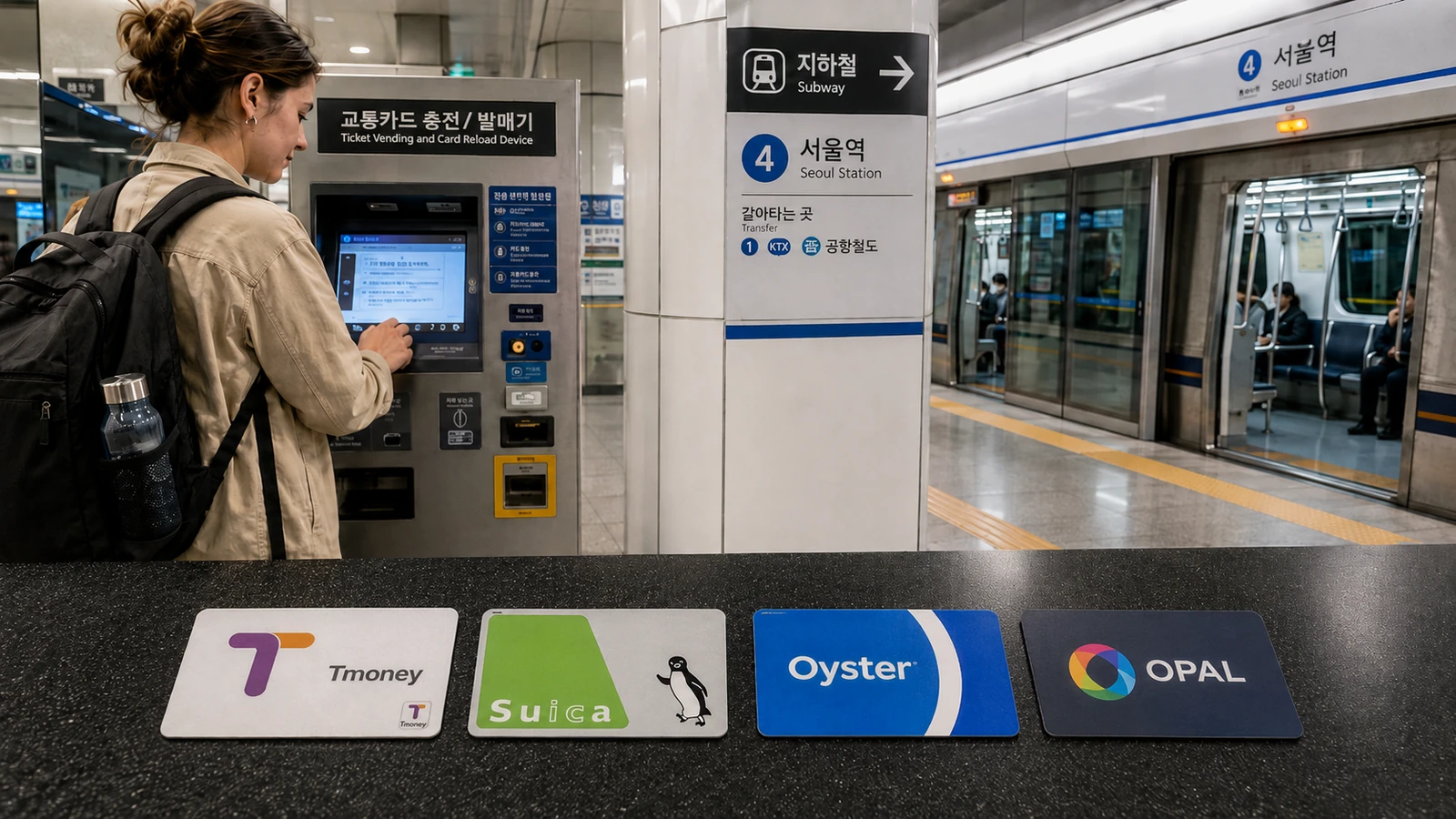
- Airport metro station kiosks, every major airport-to-city train has a kiosk selling the card with English UI. Tokyo's Suica (now buyable as Welcome Suica for tourists, no deposit), London's Oyster, Paris's Navigo Easy, Madrid's Multi card, Berlin's BVG card, Hong Kong's Octopus, Seoul's T-Money, Singapore's EZ-Link, Sydney's Opal, etc.
- Convenience stores at the destination · 7-Eleven, FamilyMart, and equivalents sell most transit cards over the counter. Useful if the airport kiosk is broken or the line is long.
- Phone wallet apps, many cards now have an "add to Apple Pay / Google Pay" option that skips the physical card entirely. Suica, Octopus, T-Money, Oyster all work this way. Check before the trip; this is the fastest option.
Load enough for 2–3 days at first ($15–30 equivalent). You can top up at any station, often in cash or by card, and many cards return the unused balance when you leave the country.
Why "day one" specifically
The card changes how you decide where to eat. Without it, the calculus is: "is this restaurant worth a $20 Uber?" and most aren't. With it, that same restaurant is one $2 train ride away and you go. The neighborhoods that are most rewarding to visit, the third-arrondissement bistros, the Shimokitazawa side streets, the Brixton market, are usually transit-rich and taxi-awkward. Day one is when the trip's vibe and route gets set; postponing the card postpones the trip starting properly.
Bottom line
Buy the card before you leave the airport. Use it from the first train into town. The 10 minutes of friction at a kiosk on arrival saves you hundreds of dollars and lets you experience the city the way locals do, which is usually the part of the city worth coming for.